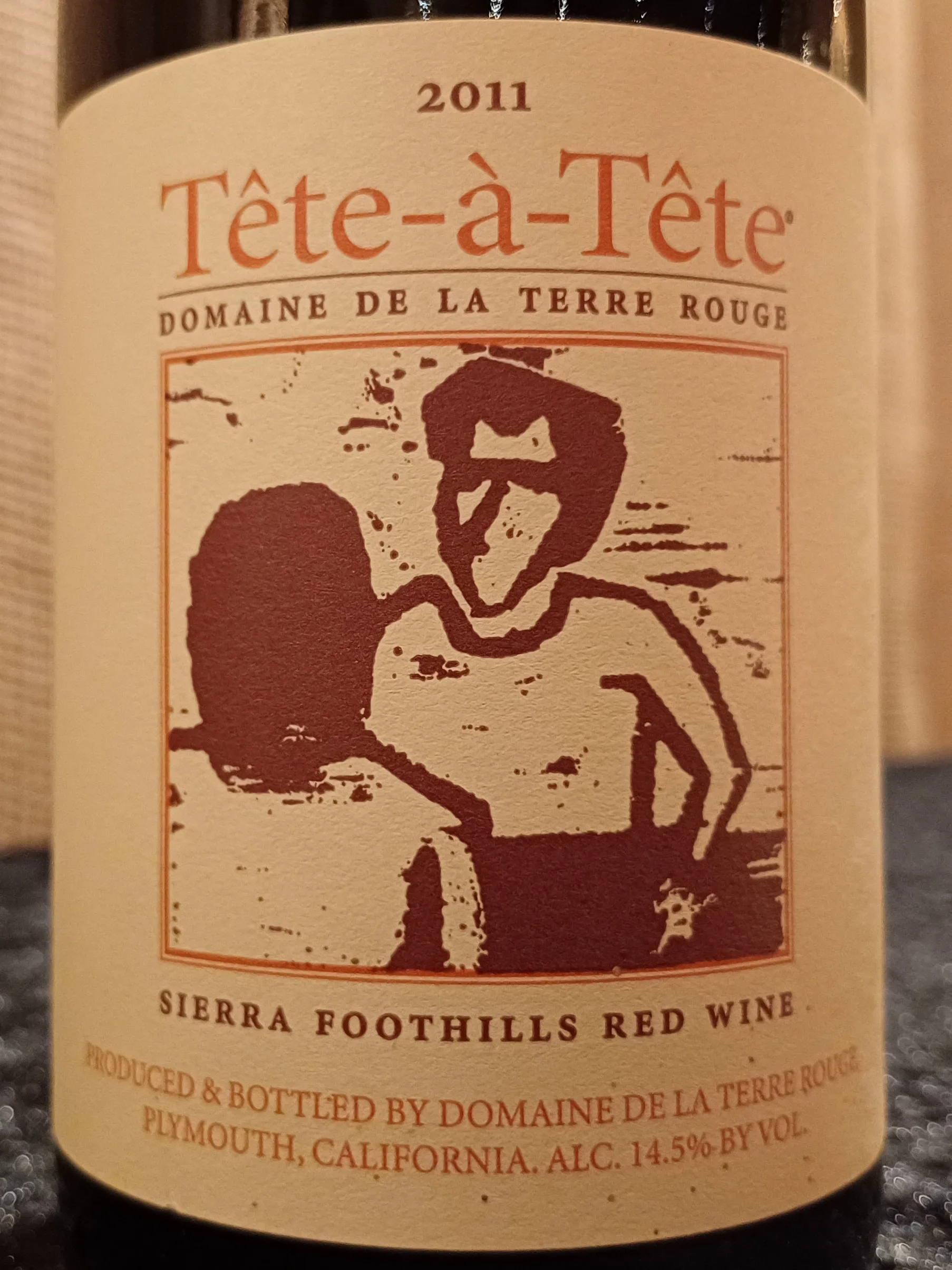

Terre Rouge Tete a Tete 2011
Terre Rouge Tete a Tete 2011 – fully mature, medium-bodied Rhône blend defined by savory layers of dried boysenberry, smoked meat, and leather, finishing with smooth tannins and earthy complexity
Producer
Country
Region
Sub Region
Sierra Foothills
Appellation
Vintage
2001
Wine Type
Grape(s)
Dietary
Alcohol %
Bottle Size
Location
Terre Rouge Tete a Tete 2011
The Terre Rouge Tete a Tete 2011 is a delightful blend of 45% Mourvèdre, 28% Syrah, and 27% Grenache. This wine offers a rich and complex tasting experience, reminiscent of a well-balanced Côtes-du-Rhône.
In the glass, the Terre Rouge Tête-à-Tête 2011 shows the wisdom of its years, likely displaying a garnet core that fades to a brick-orange rim. It is a wine that has traded the boisterous energy of youth for a mellow, savory sophistication. The nose is less about a fruit basket and more about the earth; it smells of dried autumn leaves, worn leather, and the smoky scent of meat curing in a cellar, with just a ghost of dark berry fruit lingering in the background.
The Sensory Experience
The Nose At this stage in its life, the 2011 Tête-à-Tête offers a complex, savory bouquet that speaks to its Mourvèdre-dominant blend (45% in this vintage). The primary fruit aromas have evolved from fresh berries into deeper notes of dried boysenberry, fig, and plum skin. These are enveloped by a distinct “wild” character typical of the Sierra Foothills terroir: aromas of smoked meat, saddle leather, and dried chaparral herbs (sage and scrub). You may also detect earthy hints of iron and damp forest floor, a hallmark of its bottle age.
The Palate The 2011 vintage was notably cool for California, resulting in a wine that feels medium-bodied, lithe, and surprisingly fresh rather than heavy or jammy. The palate is defined by a savory backbone—think cured charcuterie and black olive tapenade—balanced by a core of tart cherry and brambly blackberry fruit. The texture is silky and fully resolved; the tannins have melted over the last decade into a smooth, polished mouthfeel, though the wine retains a zesty acidity that keeps it alive and food-friendly.
The Finish The finish is dry, savory, and persistent. As the fruit fades, it leaves behind a lingering impression of white pepper, woodsmoke, and a mineral dustiness reminiscent of the region’s granitic soils. It lacks the sugary sweetness of modern Californian reds, finishing instead with an elegant, old-world rusticity.
The 2011 Tête-à-Tête is a testament to the “Old World” philosophy of winemaker Bill Easton, often regarded as one of the original Rhône Rangers of the Sierra Foothills. The name Tête-à-Tête (meaning “head-to-head” or an intimate conversation) reflects the harmonious interplay of its components. For the cooler 2011 vintage, Easton crafted a unique blend dominated by Mourvèdre (45%), supported by Syrah (28%) and Grenache (27%). This Mourvèdre-heavy base provides the wine with its distinctive structural backbone and savory, gamey complexity, setting it apart from more fruit-bomb styles of Californian reds.
Sourced from high-altitude vineyards (up to 3,200 feet) rooted in the region’s signature vermillion-colored granitic and volcanic soils, the grapes were hand-harvested to ensure integrity. The winemaking process prioritized terroir expression over manipulation: the fruit was fermented in stainless steel to capture fresh aromatics, using traditional techniques like punch-downs to gently extract color and flavor without harsh bitterness. Unlike many modern Californian reds, this wine was not subjected to aggressive filtration or fining, preserving its natural texture and depth.
Maturation & Aging Profile
In the Winery: Following fermentation, the wine underwent a maturation period of approximately 16 to 17 months in seasoned French oak barrels (often described as “older Burgundy barrels”). The use of neutral, older oak rather than new wood was a deliberate choice. It allowed the wine to breathe and soften through micro-oxygenation, rounding out the tannins without masking the delicate varietal characteristics with heavy vanilla or toast flavors. This approach ensured that the spice and earth of the Sierra Foothills terroir remained the focal point.
In the Bottle (Current State): As of late 2025, the 2011 vintage is sitting at the far end of its drinking window. Originally designed as an approachable “village-style” wine for consumption within its first 5–8 years, it has defied expectations due to the high natural acidity of the cool 2011 growing season. The primary fruit vibrancy has largely evolved into tertiary complexity—dried fig, leather, and forest floor. While it may still offer a pleasurable, rustic drinking experience, it is fully resolved and fragile. Further aging is not recommended, as the fruit will continue to dry out, leaving the wine hollow; it is a bottle to be opened and enjoyed immediately for its savory, historical charm.
Terre Rouge wines, founded in 1985 by Bill Easton and Jane O’Riordan in California’s Sierra Foothills, are renowned for their Rhône varietals. The name “Terre Rouge” means “Red Earth,” reflecting the region’s red volcanic soils. Known for exceptional Syrah, Grenache, and Roussanne, Terre Rouge has earned acclaim, including a perfect 100-point rating for their Ascent Syrah. Their dedication to quality and innovation has made them a respected name in the wine world.
Grenache / Garnacha
Deliciously, round, fruity and heartwarming, grenache can be truly majestic when done well. Its likeability comes largely from its full body and sensation of sweetness which comes from its high levels of alcohol and glycerol. Expect plump, red fruits, black cherry, baking spice flavours and a hit of white pepper, developing into jammier, stewed fruit flavours in hotter regions.
Mourvèdre
Mourvèdre, also known as Monastrell in Spain and Mataro in Australia, is a grape variety deeply cherished for its robust and full-bodied wines. It flourishes in warm, sun-drenched regions like the Rhône Valley in France and the Jumilla region in Spain.
Wines made from Mourvèdre are typically intense and complex, showcasing rich flavors of blackberry, plum, and earthy undertones, often accompanied by hints of pepper, game, and dried herbs. This grape yields wines with a firm tannic structure and substantial body, making them well-suited for aging. Whether enjoyed as a single varietal or as part of a blend—such as the classic GSM blend (Grenache, Syrah, Mourvèdre)—Mourvèdre’s depth and complexity offer a captivating experience for wine enthusiasts.
Shiraz
Syrah, or shiraz as it’s known in the New World, is considered to be one of the great noble black grape varieties, because it can produce such deliciously dark, full-bodied and age-worthy wines.
Expect rich, brooding flavours of blackberry, black plums and blackcurrant, with spicy, coffee, leathery and liquorice notes in hotter regions and gamey, truffle notes developing with a bit of age.
- Contains Sulphites
There are no reviews yet. Be the first one to write one.


The Country
The United States boasts a rich tapestry of wines, reflecting its vast and varied terroir. Winemaking in the U.S. dates back to the early European colonists and has overcome challenges such as Prohibition in the 1930s. Today, it’s the 4th largest wine producer globally, with California leading at 90% of the country’s output. The Golden State is known for its robust Cabernet Sauvignon and Zinfandel, while Oregon excels in Pinot Noir and aromatic whites. Washington State offers fruity reds with sweet-tart acidity, and New York is gaining fame for its Riesling and Merlot-based blends. The U.S. wine scene is characterized by its pioneering spirit and the pursuit of winemaking excellence, with every state contributing to its dynamic wine culture


The Region
California, one of the world’s premier wine regions, produces a diverse array of wines that delight wine enthusiasts globally featuring grapes such as
- Cabernet Sauvignon: Rich and indulgent, Napa Valley Cabernet Sauvignon, such as Duckhorn’s 2019 Monitor Ledge Vineyard, impresses with its depth and character.
- Pinot Noir: Refreshing and memorable, Sta. Rita Hills’ Brewer-Clifton 2021 Pinot Noir offers elegance and finesse.
- Chardonnay: Full-blown and buttery, Sonoma Coast’s Three Sticks 2021 Gap’s Crown Vineyard Chardonnay is a treat for the senses.





The Producer
Terre Rouge wines, founded in 1985 by Bill Easton and Jane O’Riordan in California’s Sierra Foothills, are renowned for their Rhône varietals. The name “Terre Rouge” means “Red Earth,” reflecting the region’s red volcanic soils. Known for exceptional Syrah, Grenache, and Roussanne, Terre Rouge has earned acclaim, including a perfect 100-point rating for their Ascent Syrah. Their dedication to quality and innovation has made them a respected name in the wine world.