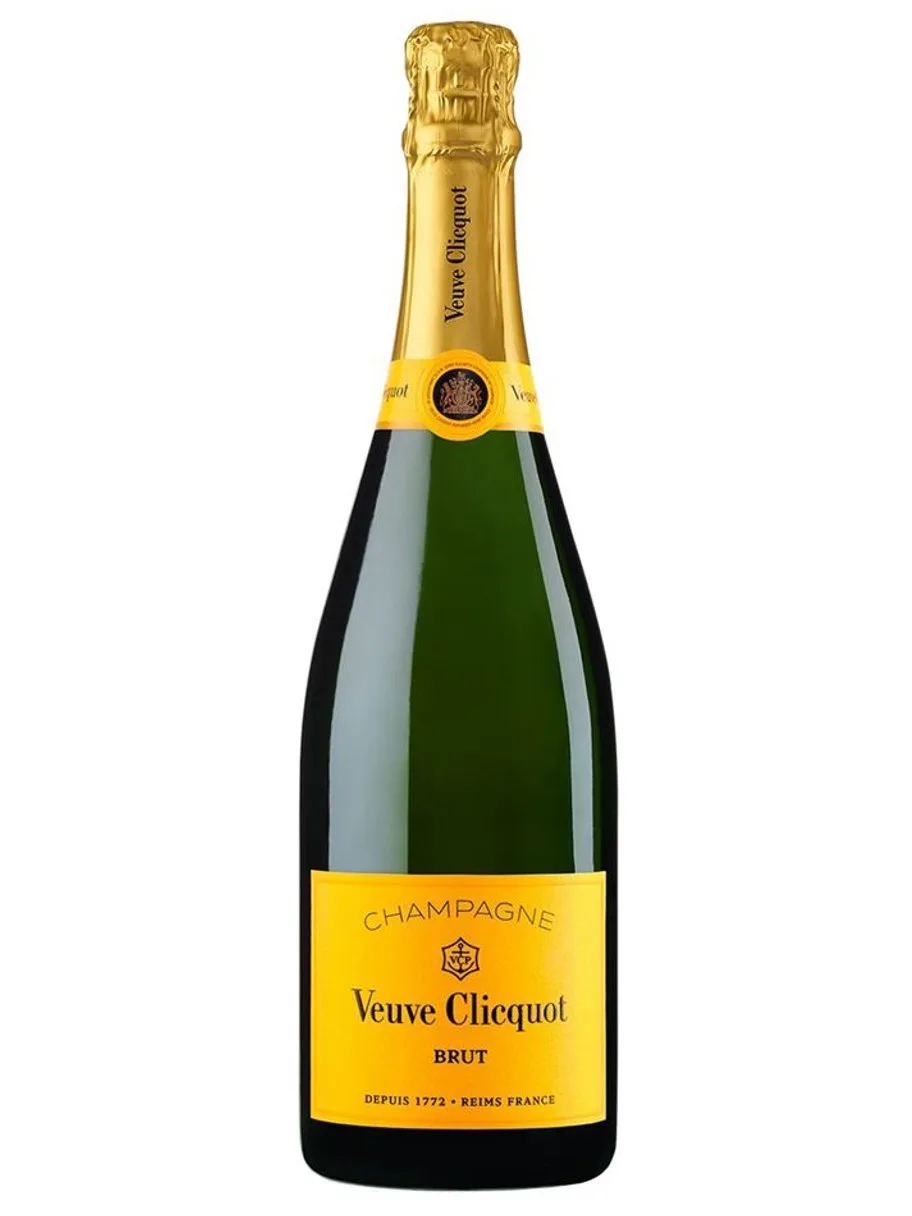
Veuve Clicquot NV Brut
Each sip unveils a vibrant golden hue, invigorated by the effervescence of fine, slender bubbles.
Producer
Country
Region
Appellation
Vintage
Wine Type
Grape(s)
Dietary
Alcohol %
Bottle Size
Location
Veuve Clicquot NV Brut, also known as Yellow Label, is a quintessential champagne that embodies the house’s signature style. This champagne is characterized by its brilliant golden yellow colour and fine, persistent effervescence. The blend predominantly features Pinot Noir (50%), which provides the structure and strength, complemented by Pinot Meunier (20%) for roundness, and Chardonnay (30%) for elegance and finesse.
Aromas and Bouquet
On the nose, Veuve Clicquot NV Brut reveals a fresh and vibrant aromatic profile. The bouquet is dominated by notes of white and yellow fruits such as pear, apple, and peach. These fruity aromas are beautifully intertwined with hints of citrus fruits like mandarin and grapefruit, adding a refreshing zest. The presence of delicate yeasts contributes subtle notes of brioche and custard, enhancing the complexity of the aroma
Palate and Taste
The palate is lively and crisp, showcasing a harmonious balance between freshness and richness. The initial sip is marked by orange-flavored freshness, followed by a medium structure that is both agile and measured. The flavors of pear, peach, and pastry are enhanced by a touch of dried fruit from aging on lees, which adds depth and aromatic richness. The finish is slightly creamy, fading into lime, with discreet persistence and a delicate perlage
Food Pairings
Veuve Clicquot NV Brut is versatile and pairs wonderfully with a variety of dishes. It complements shellfish, seafood, and dishes like parmigiana ravioli, spaghetti with clams, chicken tikka masala, chicken cacciatore, vitello tonnato, truffle risotto, and pasta alla carbonara. Its balanced profile makes it an excellent choice for both casual and celebratory occasion
Veuve Clicquot NV Brut is a marvel of meticulous winemaking and thoughtful aging. The foundation of this fine champagne is laid in the lush vineyards of the Champagne region, known for their unique terroirs and ideal grape-growing conditions. Grapes are carefully harvested and then subjected to whole bunch pressing, ensuring the juice remains clear, fresh, and high in acidity.
The vinification process begins with separate fermentation for each grape variety and each vineyard plot, preserving the distinct characteristics of the grapes. The blend typically comprises 55% Pinot Noir, 30% Chardonnay, and 15% Meunier. After the first fermentation, the wine undergoes malolactic fermentation, smoothing the acidity and adding to the complexity of flavours.
Once the initial fermentations are complete, the process of aging begins. The wine is aged on its lees for a minimum of three years, during which it develops its signature toasty, rich notes. The aging in the bottle allows the wine to acquire a balance between the robust character of Pinot Noir and the finer, more elegant notes of Chardonnay, with Meunier adding to the overall harmony. The final result is a well-rounded champagne that speaks to both the artistry and heritage of Veuve Clicquot
Veuve Clicquot’s rich history began in 1772 when Philippe Clicquot established his wine business in the Champagne region. The company took on its iconic identity when Barbe-Nicole Ponsardin, married to François Clicquot, took over after her husband’s untimely death in 1805. At just 27, Barbe-Nicole, known as Widow (Veuve) Clicquot, displayed remarkable innovation and business acumen. She developed the riddling process to clarify the wine and created the first known vintage champagne in 1810. Through her relentless drive, she turned Veuve Clicquot into one of the most esteemed champagne houses, favoured in royal courts and high society across Europe
Chardonnay
From crisp unoaked versions from cool climates, to full-bodied and oak-aged versions from more moderate climates, and even to sparkling blanc de blancs, the flavors of Chardonnay can vary significantly, while also retaining common characteristics.
On the nose, unoaked, or ‘Chablis-style’ Chardonnays, tend to offer fragrant notes of green apple, pear, and citrus, with some chalky or mineral-like aromas.
Oaked Chardonnays, particularly those in the ‘Burgundian’ style, will often present rich aromas of peach, mango, and lemon, accompanied by notes of vanilla, butter, and often a hint of toasted bread or nuttiness due to the influence of oak, malolactic fermentation, and lees stirring.
On the palate Chardonnay offers a broad range of experiences depending on its style. Unoaked Chardonnays are typically lean and crisp, with high acidity, often resembling the freshness of a Sauvignon Blanc but with more body.
Oaked Chardonnays are known for their full-bodied, creamy mouthfeel, moderate acidity, and flavors of butter, vanilla, baking spices overlaying a stone fruit character. Despite the stylistic differences, both types tend to share a characteristic underlying note of apple or citrus. With age, no matter the style, chardonnay tends to develop hazelnut aromas. Most wines range from 12-14%.
Pinot Meunier
Pinot Meunier (or just Meunier) is a dark-berried grape variety, most famously used in the Champagne blend. Less highly acclaimed than its partners Pinot Noir and Chardonnay, Pinot Meunier is something of a quiet workhorse in Champagne. The word Meunier is French for “miller”, and refers here to the “floury” appearance of the underside of the vines’ leaves.
Pinot Noir
At first glance, most Pinot Noir wines are pale to medium in color due to their thin skins. Pinot Noir has a unique profile dominated by aroma compounds known as esters. These give it a complex array of flavors, from ripe cherry and raspberry to intriguing undertones of forest floor, tea leaves, and sometimes even clove.
On the nose, Pinot Noir is all about the symphony of red fruits. Yet, it also unveils layers of earthiness, spice, and, when oak-aged, gentle wafts of vanilla and smoke. As it ages, you might catch hints of mushroom and leather.
On the palate Pinot Noir is usually light to medium-bodied, with lower tannins (thanks to those thinner skins) and high acidity, making it a wine of grace and subtlety. The alcohol levels tend to be moderate, usually around 12-14%, contributing to its silky and elegant mouthfeel.
- Contains Sulphites
- Contains Yeast/Yeast Extracts
- Suitable for Vegans
- Suitable for Vegetarians
There are no reviews yet. Be the first one to write one.


The Country
French wine, steeped in history and tradition, offers a rich tapestry of flavors and styles. Bordeaux’s iconic red blends—Cabernet Sauvignon and Merlot—create wines with structured tannins and notes of blackcurrant, plum, and cedar. Burgundy’s Pinot Noir and Chardonnay yield velvety reds and crisp whites. Champagne sparkles with toasty brioche and citrus. The Rhône Valley boasts bold Syrah, while Alsace’s Riesling and Gewürztraminer express floral aromas. From Provence’s pale rosés to Corsica’s sun-kissed Vermentino, each bottle tells a story. Santé!


The Region
Champagne, the world’s most famous sparkling wine, originates and is produced in the Champagne wine region of France. Using principal grape varieties in Champagne such as Chardonnay, Pinot Noir, and Pinot Meunier.





The Producer
Veuve Clicquot’s rich history began in 1772 when Philippe Clicquot established his wine business in the Champagne region. The company took on its iconic identity when Barbe-Nicole Ponsardin, married to François Clicquot, took over after her husband’s untimely death in 1805. At just 27, Barbe-Nicole, known as Widow (Veuve) Clicquot, displayed remarkable innovation and business acumen. She developed the riddling process to clarify the wine and created the first known vintage champagne in 1810. Through her relentless drive, she turned Veuve Clicquot into one of the most esteemed champagne houses, favoured in royal courts and high society across Europe
Related Posts

| 1. Quick Exploration of French Wines |