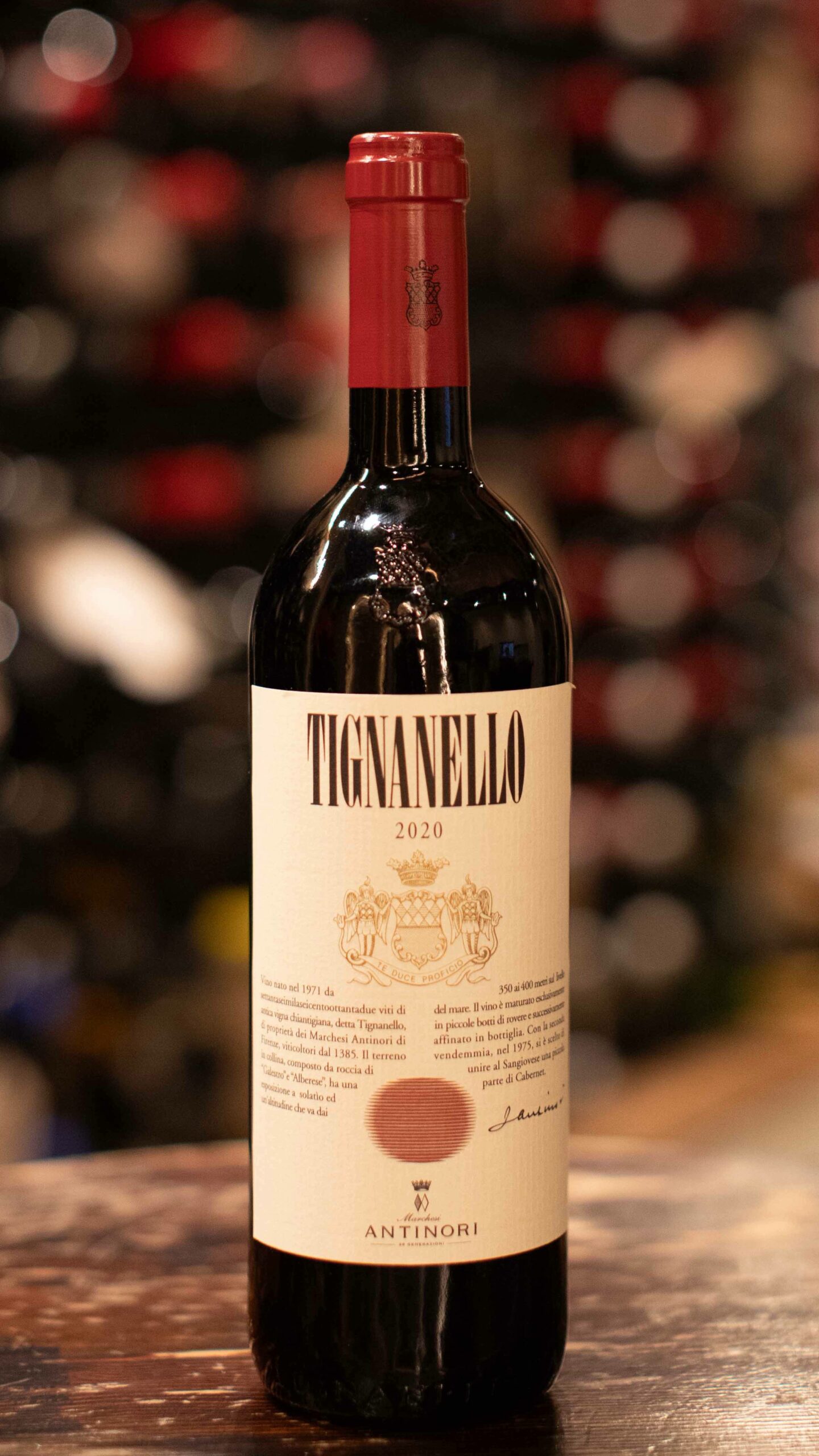
Antinori Tignanello 2020
Producer
Country
Region
Appellation
Vintage
2020
Wine Type
Grape(s)
Dietary
Alcohol %
Bottle Size
Location
Color: Intensely ruby red.
Aroma: A bouquet of ripe red fruits like cherries, strawberries, and blackberries.
Floral Notes: Delicate hints of violets, mallow blossoms, and roses.
Additional Scents: Roasted coffee and cocoa powder.
This vintage is celebrated for its aromatic finesse and complexity, reflecting a blend of Sangiovese, Cabernet Sauvignon, and Cabernet Franc
blend of Sangiovese, Cabernet Sauvignon, and Cabernet Franc.
Each must is macerated on the skins to preserve aromas, extract color, and encourage the development of supple and elegant tannins. The wine is aged in French and Hungarian oak barrels for 15 months. Initially, the lots are aged separately, then blended and completed their barrel aging.
Cantina Sociale “Ai Vini delle Langhe”, a winemaking co-op, was incorporated in 1904 in the city council room of Serralunga’s Town. In 1922, Alfredo Prunotto met and married Luigina. Together they decided to take over the “Ai Vini delle Langhe” co-op and gave it their name.In 1956, Alfredo Prunotto decided to retire and he sold the company to wine technician and friend Beppe Colla who was assisted by Carlo Filiberti and later by his brother Tino Colla. As early as 1961, the owners of Prunotto began to identify specific production areas, well-know vineyards of excellence, and began single vineyard vinification to produce the very best crus such as Barolo Bussia and Barbera d’Alba Pian Romualdo. The Antinori family first became involved with the Prunotto winery in 1989 initially handling distribution and then in 1994, when the Colla brothers decided to retire, they took over production upholding the excellent quality standards that Alfredo Prunotto successfully achieved. In 1990 this project took shape when Albiera Antinori, Marchese Piero Antinori’s eldest daughter, further defined the winery’s personality by concentrating on the vineyards: the first was the Bussia vineyard, one of the most prestigious in the Barolo area followed by Costamiòle in Agliano to produce Nizza,
Cabernet Franc
Cabernet Franc has proven to be very robust and produce good quality red wines in a range of climates. This is a clue to its diversity of tastes. From tart red fruit flavours in cooler climates such to more dried fruit flavours and fuller bodied wines in warmer areas such as Tuscany and California. You’ll also find a mixture of savoury, tart, and herbal flavours in moderate climates, such as Bordeaux.
Cabernet Sauvignon
World-renowned and well-travelled, cabernet sauvignon wines makes some of the world’s finest red wines, working either on its own, or blended with other varieties.
While many grape varieties are known for their friendly fruit aromas, cabernet sauvignon’s success as a fine wine lies in its subtleties: secondary, complex flavours that have the potential to develop deliciously in bottle over time. For this reason, cabernet is often seen as quite a ‘serious’ red wine designed for cellaring and keeping for many years. However, you can certainly find younger, fruitier styles to help you explore the flavours of this iconic grape.
Sangiovese
The Sangiovese grape is a red Italian wine grape variety that is most notably associated with the wines of Tuscany. Its name is derived from the Latin sanguis Jovis, “the blood of Jupiter”. Here are some key points about Sangiovese:
Origin and Regions: Sangiovese is primarily grown in the central regions of Italy, especially in Tuscany. It thrives in subregions like Chianti, Montalcino, and Montepulciano, where it is used to craft wines that reflect the unique nuances of the land.
Characteristics: Young Sangiovese wines can exhibit fresh fruity Flavors of strawberry and a hint of spiciness. With aging, particularly in barrels, they can develop oaky or even tarry Flavors.
Wine Styles: Sangiovese is versatile and is used in both single varietal wines and blends. It’s the primary grape in iconic Italian wines such as Brunello di Montalcino, Vino Nobile di Montepulciano, and Chianti Classico.
Clones and Viticulture: There are at least fourteen clones of Sangiovese, including Brunello. The grape is rot-prone and requires careful vineyard management.
Global Presence: While its stronghold is in Italy, Sangiovese is also cultivated in other Old World wine regions and in the New World, though to a lesser extent.
Sangiovese’s ability to express terroir and age gracefully has earned it a revered status among wine enthusiasts, making it one of Italy’s most cherished grape varieties.
James Suckling 97/100
There are no reviews yet. Be the first one to write one.


The Country
Italian wine, with its rich diversity and quality, is a reflection of the country’s deep-rooted wine culture and the varied terroirs that span from the Alpine slopes in the north to the sun-drenched islands in the south. Italy is renowned for being the world’s largest wine producer, offering an array of wines that are as diverse as its cuisine. From the robust and age-worthy Barolo and Barbaresco wines of Piedmont to the light and zesty Pinot Grigio of the Veneto region, Italian wines are made to complement a wide range of foods and occasions. The country’s winemaking history dates back thousands of years, influenced by ancient civilizations such as the Etruscans and Romans, and continues to evolve today. Each region boasts its own indigenous grape varieties, with over 350 officially recognized by the Italian government, contributing to the unique character and flavor profiles of Italian wines. Whether it’s a Chianti Classico enjoyed with pasta in a Tuscan villa or a crisp Prosecco toasting a special moment, Italian wines encapsulate the essence of la dolce vita—the sweet life


The Region
Tuscany, the heart of Italian winemaking, boasts a rich history and diverse range of wines with styles such as
- Chianti: A classic red blend from Tuscany, Chianti is primarily made with at least 70% Sangiovese grapes. It ranges from light to full-bodied, offering red cherry fruit, herbal nuances, and earthy notes.
- Brunello di Montalcino: Produced around the town of Montalcino, this red wine is made exclusively from Sangiovese grapes. Initially juicy and spicy, it develops strong aromas of cherry and leather over time.
- Vino Nobile di Montepulciano: Produced around Montepulciano, this prized wine features Sangiovese (Prugnolo Gentile) as the main grape. Young versions display ripe red fruit, while aged ones develop robust flavors of tar, smoke, and leather.





The Producer
Cantina Sociale “Ai Vini delle Langhe”, a winemaking co-op, was incorporated in 1904 in the city council room of Serralunga’s Town. In 1922, Alfredo Prunotto met and married Luigina. Together they decided to take over the “Ai Vini delle Langhe” co-op and gave it their name.In 1956, Alfredo Prunotto decided to retire and he sold the company to wine technician and friend Beppe Colla who was assisted by Carlo Filiberti and later by his brother Tino Colla. As early as 1961, the owners of Prunotto began to identify specific production areas, well-know vineyards of excellence, and began single vineyard vinification to produce the very best crus such as Barolo Bussia and Barbera d’Alba Pian Romualdo. The Antinori family first became involved with the Prunotto winery in 1989 initially handling distribution and then in 1994, when the Colla brothers decided to retire, they took over production upholding the excellent quality standards that Alfredo Prunotto successfully achieved. In 1990 this project took shape when Albiera Antinori, Marchese Piero Antinori’s eldest daughter, further defined the winery’s personality by concentrating on the vineyards: the first was the Bussia vineyard, one of the most prestigious in the Barolo area followed by Costamiòle in Agliano to produce Nizza,
Related Posts

| 2. Quick Exploration of Italian Wines |