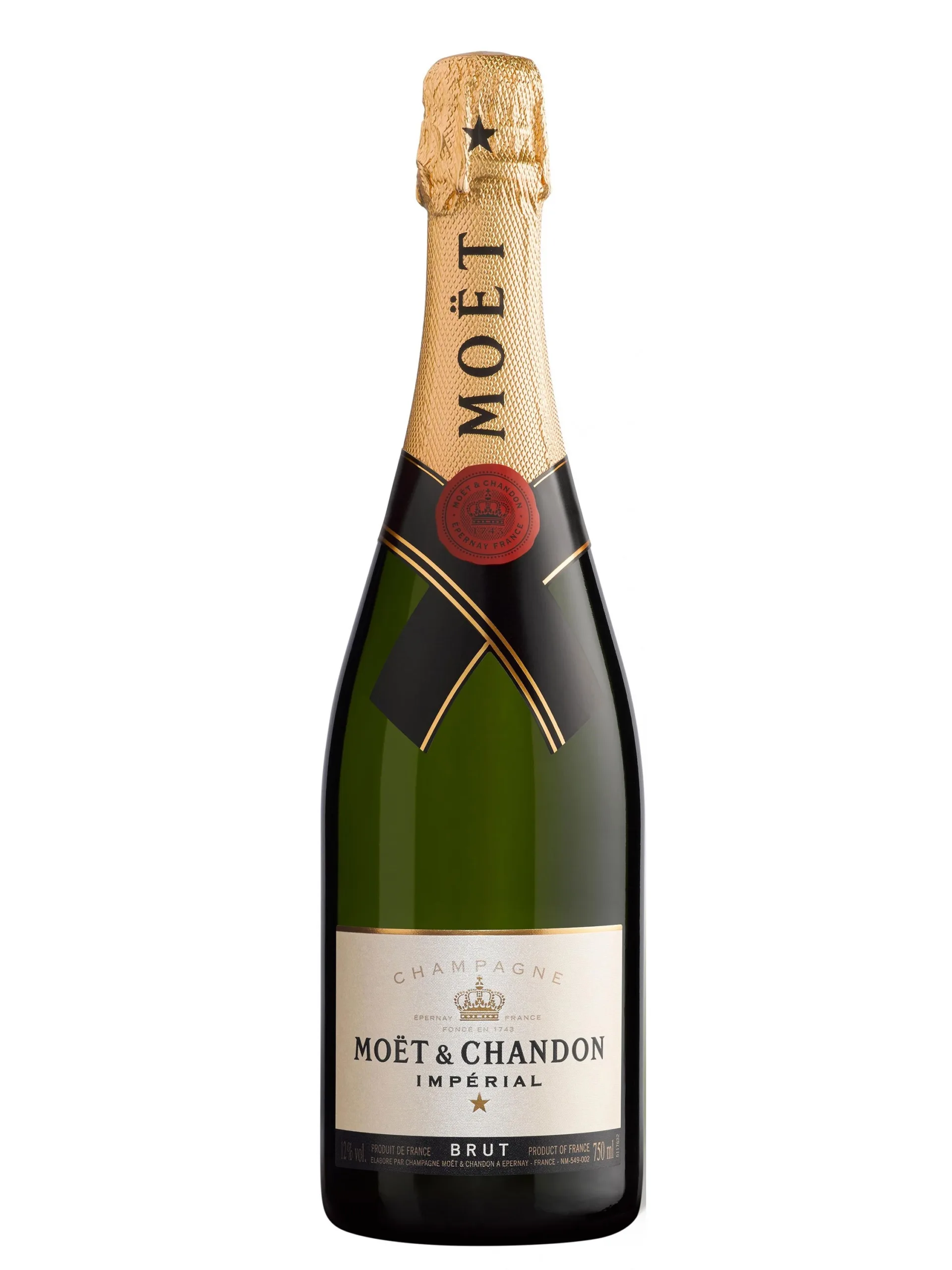
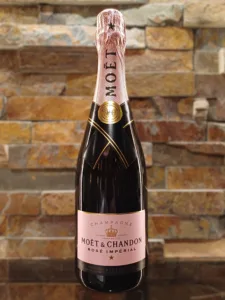
Moet & Chandon Brut Imperial Champagne
A sparkling bouquet with a vibrant intensity of green apple and citrus fruit, freshness of mineral nuances and white flowers and elegance of blond notes (brioche, cereal, fresh nuts)
Producer
Country
Region
Appellation
Vintage
Wine Type
Grape(s)
Dietary
Alcohol %
Bottle Size
Location
£14
Moet & Chandon Brut Imperial
Delights the senses with its harmonious blend and elegant complexity. This champagne reveals a bright and radiant straw-yellow colour, with fine, consistent bubbles that dance gracefully in the glass. On the nose, it opens with vibrant aromas of green apple and citrus fruits, interwoven with more nuanced notes of white flowers and freshly baked brioche, suggesting its refined aging process.
Upon tasting, the palate experiences an exquisite balance of fresh crispness and creamy texture, highlighted by flavours of pear, peach, and subtle hints of honey and almond. The finish is refreshingly dry, leaving a lasting impression of elegance and sophistication. Perfect for celebrating special moments, Moët & Chandon Brut Imperial epitomizes the charm and allure of traditional champagne craftsmanship
Appearance: As you pour Moët & Chandon Brut Imperial into a glass, the champagne reveals a mesmerizing golden straw yellow colour, interspersed with delicate green glints that dance in the light. The bubbles rise gracefully, forming a persistent and elegant stream that hints at the champagne’s vivacity and refinement.
Nose: Bringing the glass to your nose, you’re immediately enveloped by a vibrant and complex bouquet. The initial aroma is dominated by the crisp freshness of green apple and zesty citrus fruits, which invigorate the senses with their bright and lively character. As you take a deeper breath, the scent evolves, revealing a subtle mineral undertone that evokes the essence of wet stones after a refreshing rain.
This mineral freshness is beautifully complemented by the delicate fragrance of white flowers, such as hawthorn and jasmine, adding a floral elegance to the nose. With time, the champagne’s maturity becomes apparent, offering tantalizing hints of freshly baked brioche, toasted cereals, and roasted nuts, which add layers of richness and complexity to the aromatic profile.
Palate: Upon tasting, Moët & Chandon Brut Imperial unfolds on the palate with a generous and lively character. The fine, persistent bubbles create a creamy and luxurious texture that enhances the overall tasting experience. The flavour profile is dominated by luscious notes of white fruits, including juicy pear, succulent white peach, and crisp apple, which provide a delightful sweetness and depth.
These fruit flavours are beautifully balanced by the champagne’s vibrant acidity, introducing a refreshing liveliness that enlivens the palate. As the champagne lingers, subtle citrus nuances, such as lemon zest and grapefruit, emerge, adding a delightful tanginess and complexity. The finish is long and satisfying, with a harmonious blend of fruitiness and minerality that leaves a lasting impression, inviting you to savour each sip.
Food Pairing: Moët & Chandon Brut Imperial is incredibly versatile when it comes to food pairings, making it a perfect companion for a wide range of dishes. Its bright acidity and elegant bubbles enhance the natural sweetness of fresh oysters, seared scallops, and delicate sushi rolls, creating a symphony of flavours that elevate the dining experience.
It also pairs wonderfully with white fish dishes, such as grilled sea bass or poached sole, where its crispness complements the tender, flaky texture of the fish. For poultry, it harmonizes beautifully with tender chicken dishes, like a classic roast chicken or a creamy chicken fricassee, adding a touch of elegance to the meal. For dessert, the champagne’s fruit-forward profile is a delightful match for white fruit tarts, such as pear or apple tart, and light, airy desserts like white chocolate mousse or a delicate lemon soufflé, creating a perfect balance of sweetness and acidity.
Moët & Chandon Brut Imperial is a true testament to the house’s signature style, characterized by its bright fruitiness, seductive palate, and elegant maturity. Each sip is a celebration of the art of champagne making, offering a sensory experience that is both delightful and memorable.
Moet & Chandon Brut Imperial is crafted using the traditional Champagne method, or method champenoise, which ensures its high quality and unique character. The production process begins with the careful selection of grapes from the Champagne region, predominantly Chardonnay, Pinot Noir, and Pinot Meunier. These grapes are pressed gently to extract the purest juice, which undergoes primary fermentation in stainless steel tanks.
Following this, the wine is blended with reserve wines to maintain the consistent house style of Moet & Chandon. The blend is then bottled with a mixture of yeast and sugar, initiating the secondary fermentation that creates the signature bubbles. This stage, known as tirage, takes place in the bottle and can last several weeks.
The aging process is a crucial factor in developing the complexity and depth of Brut Imperial. The bottles are stored horizontally in cool, dark cellars for at least 15 months, although Moet & Chandon often extends this period to enhance the wine’s richness and finesse. During this time, the lees (yeast sediment) interact with the wine, imparting those delightful brioche and toasty notes.
Finally, the bottles undergo riddling and disgorging to remove the lees, and a dosage (a small amount of sugar dissolved in wine) is added to achieve the desired balance of sweetness. The bottles are then corked, labelled, and prepared for enjoyment.
Moet has been associated with the sparkle of success and glamour ever since the House was founded in 1743 by Claude Moet. These are the values that we share and the values that inspired the founder’s grandson Jean-Remy Moet.
Chardonnay
From crisp unoaked versions from cool climates, to full-bodied and oak-aged versions from more moderate climates, and even to sparkling blanc de blancs, the flavors of Chardonnay can vary significantly, while also retaining common characteristics.
On the nose, unoaked, or ‘Chablis-style’ Chardonnays, tend to offer fragrant notes of green apple, pear, and citrus, with some chalky or mineral-like aromas.
Oaked Chardonnays, particularly those in the ‘Burgundian’ style, will often present rich aromas of peach, mango, and lemon, accompanied by notes of vanilla, butter, and often a hint of toasted bread or nuttiness due to the influence of oak, malolactic fermentation, and lees stirring.
On the palate Chardonnay offers a broad range of experiences depending on its style. Unoaked Chardonnays are typically lean and crisp, with high acidity, often resembling the freshness of a Sauvignon Blanc but with more body.
Oaked Chardonnays are known for their full-bodied, creamy mouthfeel, moderate acidity, and flavors of butter, vanilla, baking spices overlaying a stone fruit character. Despite the stylistic differences, both types tend to share a characteristic underlying note of apple or citrus. With age, no matter the style, chardonnay tends to develop hazelnut aromas. Most wines range from 12-14%.
Pinot Meunier
Pinot Meunier (or just Meunier) is a dark-berried grape variety, most famously used in the Champagne blend. Less highly acclaimed than its partners Pinot Noir and Chardonnay, Pinot Meunier is something of a quiet workhorse in Champagne. The word Meunier is French for “miller”, and refers here to the “floury” appearance of the underside of the vines’ leaves.
Pinot Noir
At first glance, most Pinot Noir wines are pale to medium in color due to their thin skins. Pinot Noir has a unique profile dominated by aroma compounds known as esters. These give it a complex array of flavors, from ripe cherry and raspberry to intriguing undertones of forest floor, tea leaves, and sometimes even clove.
On the nose, Pinot Noir is all about the symphony of red fruits. Yet, it also unveils layers of earthiness, spice, and, when oak-aged, gentle wafts of vanilla and smoke. As it ages, you might catch hints of mushroom and leather.
On the palate Pinot Noir is usually light to medium-bodied, with lower tannins (thanks to those thinner skins) and high acidity, making it a wine of grace and subtlety. The alcohol levels tend to be moderate, usually around 12-14%, contributing to its silky and elegant mouthfeel.
- Contains Sulphites
- Contains Yeast/Yeast Extracts
- Suitable for Vegans
- Suitable for Vegetarians
There are no reviews yet. Be the first one to write one.


The Country
French wine, steeped in history and tradition, offers a rich tapestry of flavors and styles. Bordeaux’s iconic red blends—Cabernet Sauvignon and Merlot—create wines with structured tannins and notes of blackcurrant, plum, and cedar. Burgundy’s Pinot Noir and Chardonnay yield velvety reds and crisp whites. Champagne sparkles with toasty brioche and citrus. The Rhône Valley boasts bold Syrah, while Alsace’s Riesling and Gewürztraminer express floral aromas. From Provence’s pale rosés to Corsica’s sun-kissed Vermentino, each bottle tells a story. Santé!


The Region
Champagne, the world’s most famous sparkling wine, originates and is produced in the Champagne wine region of France. Using principal grape varieties in Champagne such as Chardonnay, Pinot Noir, and Pinot Meunier.





The Producer
Moet has been associated with the sparkle of success and glamour ever since the House was founded in 1743 by Claude Moet. These are the values that we share and the values that inspired the founder’s grandson Jean-Remy Moet.
Related Posts

| 1. Quick Exploration of French Wines |