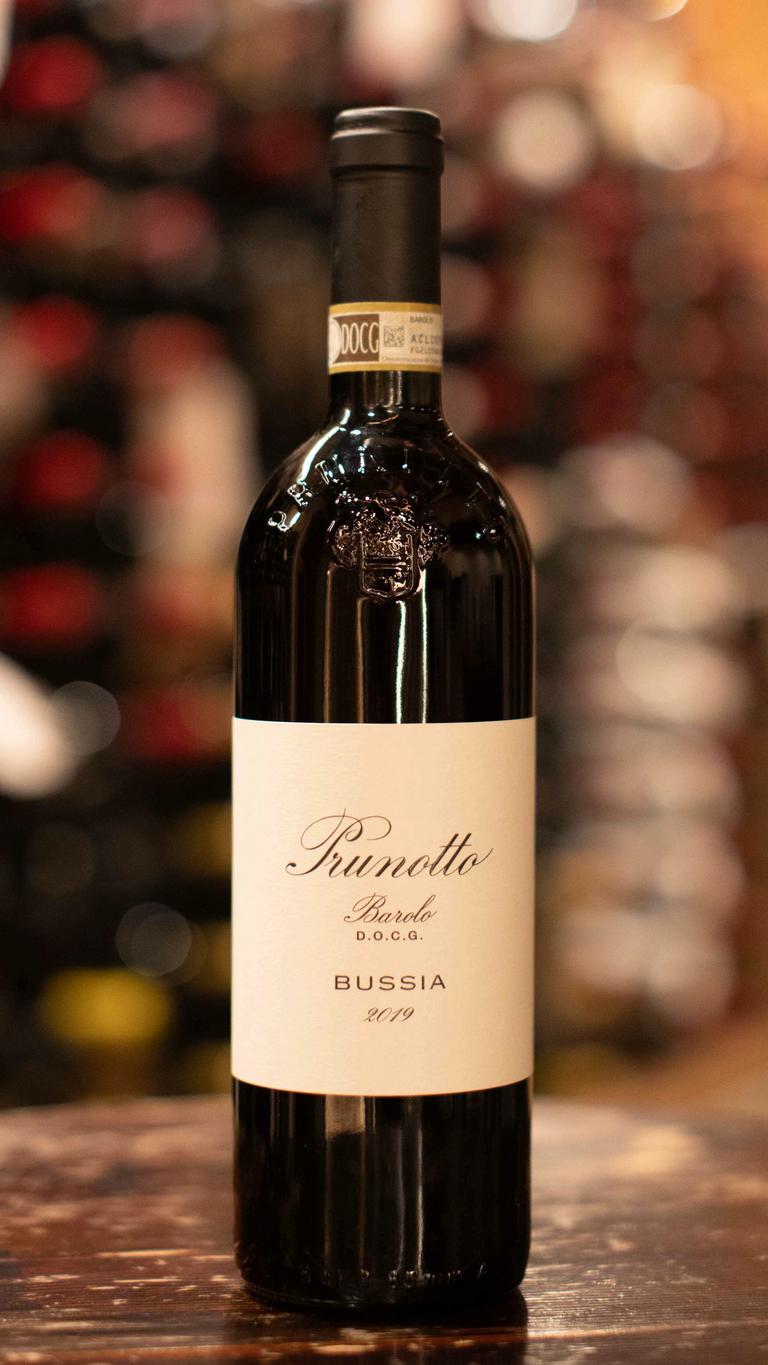
The Barolo Bussia Prunotto 2019 – Barolo Bussia has an intense garnet red colour with ruby red hues. On the nose, aromas of ripe stone fruit merge with floral and spicy notes. It has an intense palate with soft mouth filling tannins and a long satisfying finish.
Alfredo Prunotto founded his business in 1922, and was one of Piemonte’s most dynamic exporters until his retirement in 1956. The company passed then to Prunotto’s friend Beppe Colla, now a revered winemaker and one of the founding fathers of modern Piemonte. His defining moment was the decision in 1961 to bottle single-vineyard, or cru, wines from the finest sites – a practice that is now the norm in the region. Those wines were made from bought-in grapes, but in the 1990s the current owners, the Antinoris of Tuscany, extended the Prunotto holdings, including plots in the outstanding Bric Turot and Bussia vineyards.
The quality of the top wines goes without saying, but the rest of the range is made with equal aplomb. The style is modern without being exaggerated: freshness of aroma and approachability of structure are viewed as positives, but copious new oak is not. Indeed, the only wines that see the inside of a brand new barrique are the outstanding single vineyard Barberas.
Nebbiolo
Nebbiolo (pronounced Nay-bee-OH-lo) is a native Italian grape variety cultivated in the northern regions, particularly in Piedmont. Its name derives from the Italian word “Nebbia,” which means “fog.”
This grape type creates exceptional wines, characterized by great finesse and extraordinary aging capacity. Nebbiolo wines are known for their high tannins, high acidity, and aromas of red cherries, tar, and rose petals.
They appear pale like Pinot Noir, but their flavour profile is anything but light. Expect striking flavours of cherry, coffee, anise, and primordial earth. These wines pair well with rustic Italian fare, savory Chinese dishes, and spice-driven Asian cuisine
There are no reviews yet. Be the first one to write one.


The Country
Italian wine, with its rich diversity and quality, is a reflection of the country’s deep-rooted wine culture and the varied terroirs that span from the Alpine slopes in the north to the sun-drenched islands in the south. Italy is renowned for being the world’s largest wine producer, offering an array of wines that are as diverse as its cuisine. From the robust and age-worthy Barolo and Barbaresco wines of Piedmont to the light and zesty Pinot Grigio of the Veneto region, Italian wines are made to complement a wide range of foods and occasions. The country’s winemaking history dates back thousands of years, influenced by ancient civilizations such as the Etruscans and Romans, and continues to evolve today. Each region boasts its own indigenous grape varieties, with over 350 officially recognized by the Italian government, contributing to the unique character and flavor profiles of Italian wines. Whether it’s a Chianti Classico enjoyed with pasta in a Tuscan villa or a crisp Prosecco toasting a special moment, Italian wines encapsulate the essence of la dolce vita—the sweet life


The Region
Piedmont, or “Piemonte” in Italian, is a renowned wine-growing region in northwestern Italy with such as Barolo which is often called the ‘King of Wines’, Barbaresco similar to Barolo but slightly more approachable, Barbera d’Asti perfect for everyday enjoyment and Moscato d’Asti sweet, aromatic, and low in alcohol

The Producer
Alfredo Prunotto founded his business in 1922, and was one of Piemonte’s most dynamic exporters until his retirement in 1956. The company passed then to Prunotto’s friend Beppe Colla, now a revered winemaker and one of the founding fathers of modern Piemonte. His defining moment was the decision in 1961 to bottle single-vineyard, or cru, wines from the finest sites – a practice that is now the norm in the region. Those wines were made from bought-in grapes, but in the 1990s the current owners, the Antinoris of Tuscany, extended the Prunotto holdings, including plots in the outstanding Bric Turot and Bussia vineyards.
The quality of the top wines goes without saying, but the rest of the range is made with equal aplomb. The style is modern without being exaggerated: freshness of aroma and approachability of structure are viewed as positives, but copious new oak is not. Indeed, the only wines that see the inside of a brand new barrique are the outstanding single vineyard Barberas.
Related Posts

| 2. Quick Exploration of Italian Wines |